Dementia Care Done Right: Choosing a Memory Care Home with Purposeful Engagement
Business Name: BeeHive Homes of Plainview
Address: 1435 Lometa Dr, Plainview, TX 79072
Phone: (806) 452-5883
BeeHive Homes of Plainview
Beehive Homes of Plainview assisted living care is ideal for those who value their independence but require help with some of the activities of daily living. Residents enjoy 24-hour support, private bedrooms with baths, medication monitoring, home-cooked meals, housekeeping and laundry services, social activities and outings, and daily physical and mental exercise opportunities. Beehive Homes memory care services accommodates the growing number of seniors affected by memory loss and dementia. Beehive Homes offers respite (short-term) care for your loved one should the need arise. Whether help is needed after a surgery or illness, for vacation coverage, or just a break from the routine, respite care provides you peace of mind for any length of stay.
1435 Lometa Dr, Plainview, TX 79072
Business Hours
Families rarely prepare for dementia. The medical diagnosis shows up in the form of repeated mislaid secrets, a range left on, a voice that when commanded details now groping for them. You start covering holes with a pillbox, a door chime, calendar pointers. Then the gaps widen. Nights stretch long and nervous. A fall, a wandering episode, or ruthless caregiver fatigue moves the discussion from coping in the house to checking out a memory care home. That search can seem like strolling into a labyrinth of similar smiles and shiny brochures, where every community states the exact same four words: safe, caring, engaging, dignified.
The distinction in between promises and practice shows up every day at 10:30 a.m., or 2:15 p.m., or when a resident wakes at 3 a.m. And wants to go to work due to the fact that his mind is in 1974. Purposeful engagement is not a line item on a calendar. It is the heartbeat of great dementia care, the factor a resident rises, eats, smiles, and feels seen. Choosing a community built around that heart beat needs more than comparing chandeliers and courtyard pictures. It requires understanding what to look for, what to ask, and how to read the subtle cues that reveal the truth.
What purposeful engagement truly means
I have actually viewed a woman with late-stage Alzheimer's transfixed by the feel of warm towels. She folded and refolded them, then laid them out with solemn care. 10 minutes later, as the towels cooled, her attention slipped. The nurse took the towels away, warmed them once again, and set them back in front of her. The resident sighed with relief and continued. That is purposeful engagement for someone whose world has diminished to touch and pattern. It draws on preserved abilities, appreciates individual history, and adapts without scolding or forcing.
Purposeful engagement is not busyness. Coloring sheets can be great, however if they are parked in front of everybody every day at 10:00, that is setting for the staff's schedule, not the homeowners' needs. True engagement uses the kept neural pathways we understand frequently continue longest in dementia: music memory, procedural memory, emotional memory, and sensory preferences. It also flexes to the hour, the person, the day. A veteran may come alive folding flags or listening to march music. A retired elementary teacher might discover calm setting out crayons and erasers. A former garden enthusiast might settle only when hands are in potting soil.
Homes that do this well seldom rely on a single activities director. Every team member, from night shift to cooking, comprehends that engagement is their task. The kitchen area group might hand a resident a whisk and request for aid. Housekeepers might invite somebody to match socks. The receptionist might use mail to sort, even if the envelopes are blank. This shared mindset turns routine moments into touchpoints of purpose.
The research study behind engagement and everyday function
We do not need to think about the advantages. In several observational research studies across assisted living and proficient nursing settings, locals with dementia who receive a minimum of 60 to 90 minutes of tailored activity spread throughout the day show fewer behavioral expressions like agitation and pacing, require fewer as-needed sedatives, and preserve much better eating patterns. Decreases in antipsychotic use by 10 to 20 percent have been reported when programs are redesigned around resident histories and preferences. Staff injury rates likewise decline when distressed behaviors are resolved proactively with engagement instead of only with redirection or medication.
Ask any skilled nurse and you will hear it in plain terms: when individuals have a factor to rise, they do. When they feel recognized, they eat. When music from their teens plays gently before supper, they do not swing at the spoon.
A calendar tells you something, but culture informs you more
Families frequently fixate on activity calendars. They are not ineffective, however they can misguide. A calendar filled with outings means nothing if your parent can not tolerate bus trips. Chair yoga 3 days a week is great, unless no one really brings your father to the class, he declines, and no one has a plan B beyond letting him nap.
What you wish to see rather is a pattern of small, versatile interactions threaded through the day. Throughout a tour, see what takes place in between scheduled occasions. Does a team member pause to look a resident in the eye and state their name? Is there a basket of headscarfs or hand towels in the living-room for spontaneous folding? Do you hear a resident's favorite vocalist in their space, not just in the typical location? A memory care home that treats engagement as oxygen, not home entertainment, will show it in the seams, not just in the front-of-house performances.
Staffing that sustains engagement, not just coverage
Ratios matter, but context makes them significant. A posted ratio of one caregiver for every single 6 residents can produce exceptional care in a steady, well-designed system where the nurse, aides, and activities personnel share responsibilities and understand residents deeply. The same ratio can seem like continuous triage in a big, poorly laid-out structure with regular firm staff who do not know the residents' patterns.
Ask about shift overlap. 10 to fifteen minutes of overlap at modification of shift can make or break connection. Question the portion of agency or float staff in the memory care community. High agency usage deteriorates the relationships that underpin personalized engagement. Explore training beyond the state minimum. Try to find programs that include hands-on dementia care techniques such as Teepa Snow's Favorable Method to Care or Montessori-based activities, combined with monitored practice and mentoring, not simply move decks.
Watch for how the nurse and beehivehomes.com memory care near me caretakers communicate. Do they carry project sheets that note resident preferences, sets off, and effective methods, updated weekly? I have actually seen simple one-page profiles cut through months of trial and error. For instance: "Mr. J. Resists showers in the morning, do sponge baths before lunch, prefers warm washcloth on neck first, provide option of 2 shirts set out on bed, play Sinatra softly before care." These micro techniques are engagement in disguise, and they protect dignity.
Environment that hints independence
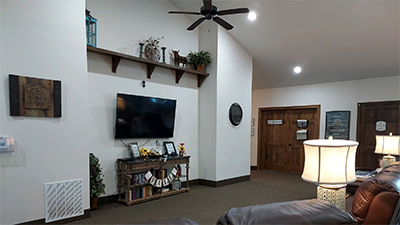
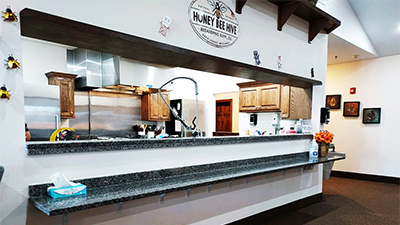
The physical layout either supports or undermines engagement. An excellent memory care home damages confusion with clear hints. Corridors should have visual landmarks, not uniform hotel decor. Customized shadow boxes by each door aid residents discover spaces. Toilets visible from the bed or with contrasting seat colors enhance continence. Kitchens open to the common area welcome spontaneous aid with safe, staged jobs like tearing lettuce, stirring batter, or buttering rolls.
Noise management is another inform. The worst systems I have entered had actually blaring televisions tuned to daytime talk programs and a constant beeping of alarms. The best seemed like a home: soft discussion, water running, somebody humming. Lighting is warm, not harsh. Glare and dark spots are reduced. Outdoors space is safe and secure and genuinely functional, with looped strolling paths and benches in both sun and shade. Locals must have the ability to go out without awaiting a staff escort each time, otherwise "fresh air" happens twice a week at 3 p.m. On the calendar and never ever when an agitated resident really requires it.
The rhythm of a day that respects the disease
Dementia does not keep banker's hours. Sundowning is genuine for many, not all. The dinner hour can be treacherous. Good programs intentionally stack encouraging engagements in the late afternoon: quiet music, hand massage, folding warm laundry, arranging large-picture recipe cards, or setting tables. The concept is to move restless energy into tactile, calming tasks.
Mornings often bring much better cognition. That is the time for bathing, medical consultations, more complicated tasks like baking or group reminiscence with photos. Naps are not sin, they are method. Citizens who sleep early afternoon can manage the evening better. None of this needs pricey devices, only attention and a determination to tailor.
Night shift matters. I ask to see what takes place at 2 a.m. Will a resident who is up and pacing be offered a warm beverage and a location to sit with a team member, or be informed repeatedly to go back to bed up until agitation escalates? Frequently the distinction in between a quiet night and a 911 call is a ten minute discussion and a peanut butter cracker.
Assisted living versus a dedicated memory care home
Many assisted living neighborhoods advertise dementia care within a bigger building. Some run really specialized communities with experienced staff, secure outside locations, and customized shows. Others merely offer more supervision behind a keypad without adjusting the environment or staff training. A dedicated memory care home tends to build whatever around cognitive loss: shorter corridors, smaller resident groups, color-contrast style, and personnel who rarely drift to other care levels.
The ideal choice depends on the resident's profile. For someone with mild to moderate disability, maintained movement, and strong social abilities, a well-supported assisted living environment with dedicated memory programming can be ideal. For somebody with exit looking for, high anxiety, sleep-wake turnaround, or complex behavioral expressions, a specialized memory care home usually uses the security and personnel expertise needed to maintain lifestyle. The key is not the label on the brochure however the fit in between your person's requirements and the community's true capabilities.
What to ask and observe on a tour
- Show me how you customize day-to-day engagement for 3 various residents. Choose one who prefers to be alone, one who is agitated, and one who is nonverbal.
- How do you handle a resident who declines group activities? Provide me an example from the last week.
- What do nights look like here in between midnight and 5 a.m.? Who is awake, and what is readily available to residents?
- How do you train new staff in locals' biography and choices, and how quickly?
- May I examine yesterday's shift notes or engagement logs, with names redacted, to see how typically and how particularly staff document what worked?
A strong team will not be tossed. They will have stories, not mottos. They will discuss Mrs. L. Who loves to "help" count flatware, or Mr. A. Who soothes with hand rubs and Johnny Money, and they will tell you what they attempted when something did not work.
Subtle red flags that forecast disappointment
- The activity calendar looks packed, but you see locals dozing in wheelchairs in front of a television through most of your visit.
- Staff can not call preferred foods, music, or regimens for a minimum of half the citizens close by, even after working there for months.
- Most engagements require citizens to come to a room at a set time, with little noticeable effort to bring the activity to the resident.
- Explanations for distress lean greatly on labels like "aggressive" or "noncompliant" instead of analysis of triggers and adjustments tried.
- You hear "we're brief today" as a blanket reason for skipped baths, missed walks, or no time for conversation, and nobody explains a backup plan.
These indications frequently tell you about culture and priorities. Periodic short staffing is reality. Persistent disengagement is a choice.
The care plan that lives off paper
Every resident has a care strategy somewhere in a binder or digital chart. In excellent communities, that strategy lives. It drives the grocery list. It alters the music playlist in the late afternoon. It forms how staff method a bath. Look for evidence that updates happen as behavior changes. If a female starts withstanding showers, did the strategy shift the time of day, try towel baths, include lavender lotion after care, or use a favorite cardigan as a "reward" right away after? If a crossword lover stops joining word video games, did staff switch to large-font word tiles, simpler categories, or one-on-one matching tasks?
Plans need to likewise account for cycles in conditions that typically accompany dementia. Pain from arthritis spikes engagement requires, so care plans that integrate arranged acetaminophen before activities can make the distinction in between success and refusal. Constipation can masquerade as agitation. A savvy team will start with a bowel check before assuming a psychiatric cause.
Managing threat without smothering life
Families understandably fear falls. Service providers fear them too, frequently to the point of inaction. However over-restricting movement results in deconditioning within weeks. A much better technique mixes layered security with ongoing movement. That may mean hip protectors for a regular faller, purposefully put durable furnishings to grab, a carpet with low pile and clear edges, and monitored "walking circuits" after meals when a resident is most restless. It might also imply accepting that a fall with a swelling is statistically less hazardous than weeks of sitting, which brings pressure injuries, infections, and lost appetite.
Technology can assist, but it is not a remedy. Door sensing units, wearable wander notifies, and pressure mats can supply backup. Video monitoring in common locations can support review after events. But none of it changes human existence that anticipates needs and provides purposeful redirection. If the option to roaming is merely locking more doors, you have actually gotten rid of danger at the expense of life.
Costs, value, and what staffing actually buys
Memory care rates is notoriously opaque. Base rates may look comparable, then balloon with care level add-ons. One neighborhood might start at a lower base but charge for every help, another might bundle more services. Engagement hardly ever appears as a line item, yet it is exactly what keeps care needs from escalating quickly. A resident who eats well since meals are unrushed and social, who strolls under supervision rather of dozing, will typically require fewer emergency clinic visits and fewer medication modifications. That saves cash, however more notably it saves suffering.
When comparing neighborhoods, convert prices into what you are purchasing per hour of awake guidance and interaction. If a system has 18 homeowners with 3 caretakers and one nurse throughout the day, you are purchasing approximately one employee per 4 to 6 homeowners, recognizing breaks and jobs off the floor. Then layer on just how much of that time is really spent with locals versus paperwork, med pass, housekeeping tasks moved to assistants, and escorting to consultations. If many waking hours are invested filling gaps, engagement suffers. Ask bluntly how the schedule protects time for interaction.
Family existence as a force multiplier
The best homes treat families as partners, not visitors to be managed. They invite you to fill out an in-depth life story, then in fact reference it. They invite your participation in little methods. One daughter I know started a routine of polishing her mother's costume precious jewelry with a soft fabric twice a week in the lounge. Within a month, three other homeowners had taken part, and personnel kept a basket of bead bracelets convenient for unscripted "sparkle time" when afternoons grew long. That child moved away 6 months later on, however the routine sustained. If a neighborhood resists little, reasonable participation since "that is our task," reconsider.
At the very same time, boundaries matter. You are buying a professional service. If a community constantly leans on household to fill fundamental engagement since staffing can not, that is a warning. The right balance is collective: staff initiate and sustain, family includes depth and texture.
A brief case study from the floor
Mr. B., 78, former mechanic, moved to a memory care home after two hospitalizations for agitation. In assisted living, he had actually been labeled combative. He struck at staff during bathing, wandered into other apartment or condos, and set off three 911 hire 2 months. On the day of admission to the memory care unit, the nurse met him with a red tool kit filled with safe products: old stimulate plugs, a blunt wrench, nuts and bolts too big to swallow. They sat together at a workbench set up at standing height. He turned bolts in between fingers, attempted to thread a nut, shook his head, tried once again. The nurse said, "Feels better to stand while working, right?" He nodded. They did that for 15 minutes before dinner.
Bathing moved to mid-morning, after hands-on time at the bench. Personnel used a "store coat" to wear afterward. Music contributed, with the soft hum of a garage environment tape-recorded on a phone playing in the background. He slept inadequately at first. Graveyard shift positioned the workbench light on low near a quiet corner. He would come out, handle parts, sip cocoa, then lie down. Within two weeks, the as-needed antipsychotic was tapered. He still had rough days. That is dementia. However the rhythm of purposeful work met him where he was, and it steadied him.
I tell this story due to the fact that it captures how engagement is not a special event. It is the core scientific intervention in dementia care, as essential as the right dose of medication or a safe gait belt technique.
Edge cases and how a great program adapts
Not everybody warms to group activity or even individually invites. Individuals with frontotemporal dementia may end up being focused on one routine and resist redirection. Somebody with Lewy body dementia might have hallucinations that require environmental changes, like decreasing patterned carpets and reflective surface areas. Extreme lethargy can look like depression, and sometimes both exist. A proficient team will trial structured sensory input like hand vibration, aromatherapy, or weighted blankets, monitor reaction, and change without pity or pressure.
In late-stage illness, engagement is typically lowered to moments: a warm cloth on the hand, a hymn hummed at the bedside, a spoon offered in rhythm with a familiar mantra, the sun on skin for 10 minutes in the courtyard. Families sometimes grieve that the person no longer "does" activities. A great memory care home will guide you to see worth in the little rituals, and they will document them as diligently as they document medications.
Hospitals are another challenging point. A resident sent out for a urinary tract infection or a fall typically returns deconditioned and disoriented. Strong programs run a "re-entry huddle": they adjust the care plan for the first 72 hours, boost engagement around meals, reduce group activities, and deploy preferred music and foods strongly to re-anchor the resident. This sort of insight prevents the all too common spiral where a medical facility stay leads to permanent decline.
How to prepare before the search
Gather the life story now. Not a novel, simply the essentials you can not pay for to forget when decisions are immediate. Favorite tunes by artist, years, tempo. Foods enjoyed and loathed, consisting of how they were prepared. Pastimes that involved hands. Work regimens. Faith practices. Early morning versus evening individual. Bathing choices. Clothing textures endured. Voices that relieve. Smells that aggravate. Bring this to tours. Watch who liven up at the detail and begins conceptualizing with you in genuine time.
Also, take an honest stock of triggers. Was your mother constantly suspicious of strangers? Did your father hate being told what to do? Did both get carsick easily? These quirks matter more now, not less. They form the plan that avoids blowups and supports dignity.
The minute you understand you have actually discovered it
You will feel it in the pace. Personnel walk quickly when required however do not hurry previous residents. They kneel to eye level before speaking. A resident who is restless has somewhere to go and something to do. Another who is quiet has a hand to hold or a lap blanket to smooth. The chef knows that Mr. R. Gets peanut butter toast when he refuses eggs, without a chart check. The nurse, when you ask about a bad day, tells you precisely what they tried initially, 2nd, and 3rd, and what they will attempt tomorrow. The activity calendar matters less due to the fact that the culture is the program.
Memory care, done right, is not less life. It is life modified down to the basics that still offer meaning. You are not choosing paint colors or a dining room. You are selecting a team that will build purpose into breakfast, into hand cleaning, into a walk to the mail box that may be six feet down the hall. You are choosing a location that understands that engagement is not a feature. It is the treatment.
The search is hard, and you will second-guess yourself. That is typical. Visit more than once, at various times of day. Bring somebody who will see different details. Trust your eyes and ears more than your worry. When you find a memory care home that lives engagement in the ordinary moments, you will see it. And you will feel your shoulders drop, just a little, due to the fact that you have discovered partners who know how to carry this with you.
BeeHive Homes of Plainview provides assisted living care
BeeHive Homes of Plainview provides memory care services
BeeHive Homes of Plainview provides respite care services
BeeHive Homes of Plainview supports assistance with bathing and grooming
BeeHive Homes of Plainview offers private bedrooms with private bathrooms
BeeHive Homes of Plainview provides medication monitoring and documentation
BeeHive Homes of Plainview serves dietitian-approved meals
BeeHive Homes of Plainview provides housekeeping services
BeeHive Homes of Plainview provides laundry services
BeeHive Homes of Plainview offers community dining and social engagement activities
BeeHive Homes of Plainview features life enrichment activities
BeeHive Homes of Plainview supports personal care assistance during meals and daily routines
BeeHive Homes of Plainview promotes frequent physical and mental exercise opportunities
BeeHive Homes of Plainview provides a home-like residential environment
BeeHive Homes of Plainview creates customized care plans as residents’ needs change
BeeHive Homes of Plainview assesses individual resident care needs
BeeHive Homes of Plainview accepts private pay and long-term care insurance
BeeHive Homes of Plainview assists qualified veterans with Aid and Attendance benefits
BeeHive Homes of Plainview encourages meaningful resident-to-staff relationships
BeeHive Homes of Plainview delivers compassionate, attentive senior care focused on dignity and comfort
BeeHive Homes of Plainview has a phone number of (806) 452-5883
BeeHive Homes of Plainview has an address of 1435 Lometa Dr, Plainview, TX 79072
BeeHive Homes of Plainview has a website https://beehivehomes.com/locations/plainview/
BeeHive Homes of Plainview has Google Maps listing https://maps.app.goo.gl/UibVhBNmSuAjkgst5
BeeHive Homes of Plainview has Facebook page https://www.facebook.com/BeeHivePV
BeeHive Homes of Plainview has an YouTube page https://www.youtube.com/@WelcomeHomeBeeHiveHomes
BeeHive Homes of Plainview won Top Assisted Living Homes 2025
BeeHive Homes of Plainview earned Best Customer Service Award 2024
BeeHive Homes of Plainview placed 1st for Senior Living Communities 2025
People Also Ask about BeeHive Homes of Plainview
What is BeeHive Homes of Plainview Living monthly room rate?
The rate depends on the level of care that is needed. We do an initial evaluation for each potential resident to determine the level of care needed. The monthly rate is based on this evaluation. There are no hidden costs or fees
Can residents stay in BeeHive Homes until the end of their life?
Usually yes. There are exceptions, such as when there are safety issues with the resident, or they need 24 hour skilled nursing services
Do we have a nurse on staff?
No, but each BeeHive Home has a consulting Nurse available 24 – 7. if nursing services are needed, a doctor can order home health to come into the home
What are BeeHive Homes’ visiting hours?
Visiting hours are adjusted to accommodate the families and the resident’s needs… just not too early or too late
Do we have couple’s rooms available?
Yes, each home has rooms designed to accommodate couples. Please ask about the availability of these rooms
Where is BeeHive Homes of Plainview located?
BeeHive Homes of Plainview is conveniently located at 1435 Lometa Dr, Plainview, TX 79072. You can easily find directions on Google Maps or call at (806) 452-5883 Monday through Sunday 9:00am to 5:00pm
How can I contact BeeHive Homes of Plainview?
You can contact BeeHive Homes of Plainview by phone at: (806) 452-5883, visit their website at https://beehivehomes.com/locations/plainview/, or connect on social media via Facebook or YouTube
Door Red offers a familiar, easy-to-navigate dining option ideal for assisted living, memory care, senior care, elderly care, and respite care visits.